
Display Technology
How to Choose the Right Interface for a TFT LCD Display
Choosing the correct TFT LCD interface is essential for image performance, hardware compatibility, EMI control and development cost. This guide compares SPI, MCU, RGB, LVDS and MIPI DSI interfaces and explains which interface is suitable for different display applications.
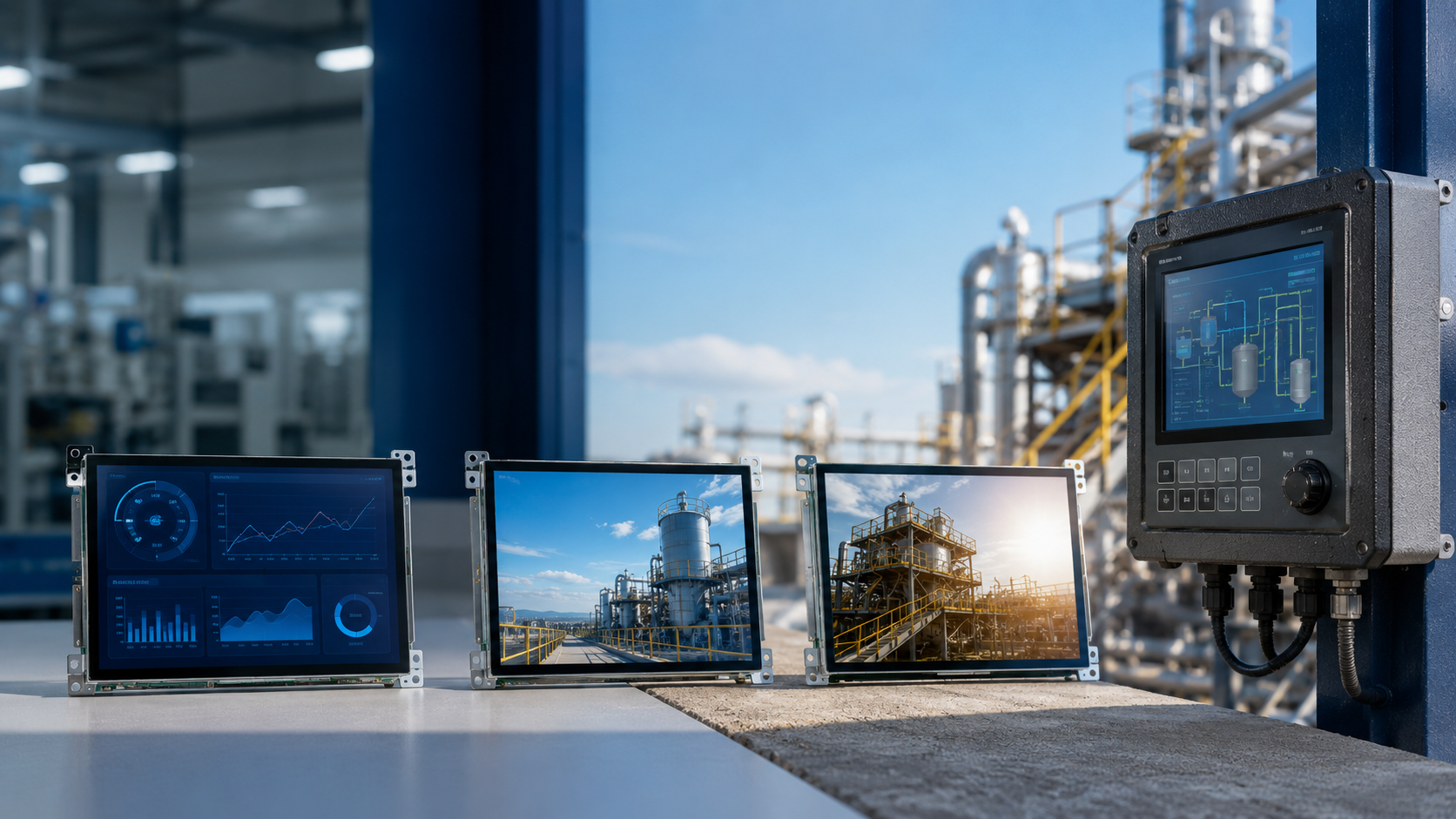
The interface is one of the most important factors when selecting a TFT LCD module. It determines how image data is transferred from the host processor to the display and affects refresh rate, wiring complexity, electromagnetic interference, software development and total system cost.
There is no single interface that is suitable for every project. A compact instrument with a simple user interface may work well with SPI, while a high-resolution industrial HMI may require RGB, LVDS or MIPI DSI. The correct choice depends on display resolution, required frame rate, host platform, transmission distance and operating environment.
Why the Display Interface Matters
The host processor must deliver enough data to refresh the complete image at the required speed. As resolution and color depth increase, the amount of data rises quickly. If the selected interface does not provide sufficient bandwidth, the display may refresh slowly, animations may appear uneven or the required resolution may not be supported.
The interface also affects PCB layout and connector design. Parallel interfaces use more signal lines, while serial interfaces reduce the pin count but may require more careful high-speed design. For industrial equipment, cable length, noise immunity and long-term component availability are also important.
SPI Interface
SPI is a serial interface that normally uses a small number of signal lines. It is widely used for small TFT LCD modules and applications where the screen content changes at a moderate speed.
SPI is suitable for:
• Small displays and compact devices • Simple menus, status information and instrument readouts • Microcontrollers with limited display-interface options • Projects where low pin count is more important than high refresh speed
The main limitation of SPI is bandwidth. It may not be suitable for large, high-resolution displays or applications requiring smooth video and fast animation. Actual performance depends on the SPI clock rate, controller IC and amount of screen data being updated.
MCU Interface
An MCU interface, sometimes described as an 8080 or 6800 parallel interface, transfers commands and pixel data through multiple data lines. It normally provides better display-update performance than SPI but requires more processor pins and PCB traces.
MCU interface is suitable for:
• Small and medium-size embedded displays • Industrial controllers and measurement equipment • Applications using a microcontroller without a native RGB output • User interfaces requiring faster updates than SPI can provide
The designer should confirm the data-bus width, voltage level, controller support and available GPIO resources before choosing this interface.
RGB Interface
RGB is a parallel video interface that sends pixel data together with synchronization and clock signals. It is commonly used for medium-size TFT LCDs and provides continuous real-time image refresh.
RGB is suitable for:
• Industrial HMIs and control panels • Medical and test equipment • Smart home terminals • Applications requiring smooth graphics or video
RGB provides good performance and is supported by many processors, but it uses many signal lines. PCB routing becomes more complex, and longer cables can increase EMI and signal-integrity risks. RGB is usually most suitable when the processor and display are located close together.
LVDS Interface
LVDS transmits high-speed image data using differential signal pairs. It offers good noise immunity and supports longer transmission distances than conventional parallel RGB. It is widely used for medium and large industrial displays.
LVDS is suitable for:
• Industrial computers and rugged HMIs • Larger or higher-resolution TFT displays • Equipment with a longer connection between the mainboard and display • Environments where EMI and signal reliability are important
Designers must verify the LVDS channel configuration, signal mapping, connector pinout, voltage and timing. Two displays with the same resolution and connector may still use different LVDS signal mappings.
MIPI DSI Interface
MIPI DSI is a high-speed serial display interface commonly used with mobile and modern embedded processors. It supports high resolution and fast refresh rates while using fewer signal lines than parallel RGB.
MIPI DSI is suitable for:
• Compact products with limited PCB space • High-resolution user interfaces • Handheld, wearable and smart devices • Processors or system-on-modules with native MIPI DSI output
MIPI DSI integration can be more demanding than SPI or RGB. The host processor must support the required lane count, data rate, initialization commands and display timing. Software and driver compatibility should be confirmed early in development.
Quick Interface Comparison
SPI: Low pin count and relatively simple hardware. It is commonly used for small instruments, wearables and status displays, but its refresh speed is limited.
MCU: Provides better update performance than SPI and works well with embedded processors. It is commonly used in controllers, meters and embedded equipment.
RGB: Provides smooth real-time graphics and video. It is commonly used in industrial HMIs, medical equipment and smart home terminals, but it requires more signal lines.
LVDS: Offers high transmission speed, good noise resistance and support for longer connection distances. It is commonly used in industrial panels and larger displays.
MIPI DSI: Provides high bandwidth with fewer signal lines. It is commonly used in compact, high-resolution products, but host and software compatibility must be verified.
Five Questions to Confirm Before Selection
1. What resolution, color depth and frame rate does the application require? 2. Which display interfaces are supported natively by the host processor? 3. How far is the display located from the main control board? 4. Will the product operate in an electrically noisy industrial environment? 5. Are software drivers, initialization code and long-term components available?
Other Details That Must Match
Selecting the interface name alone is not enough. The design team should also confirm logic voltage, connector type, FPC direction, pin assignment, timing parameters, display controller IC and initialization sequence.
If a touch panel is included, its interface—commonly I²C or USB—must be evaluated separately from the TFT image interface.
Conclusion
SPI and MCU interfaces are practical for compact embedded products with moderate update requirements. RGB provides smooth graphics for many HMI applications. LVDS is a strong option for larger industrial displays and longer connections, while MIPI DSI is well suited to compact, high-resolution systems with compatible processors.
HXD-LCD can help evaluate interface compatibility and provide TFT LCD modules with suitable resolution, brightness, touch, connector and mechanical customization. To receive a display recommendation, send us your required screen size, resolution, host processor, preferred interface, operating environment and estimated annual quantity.