
Display Technology
Custom LCD Display Development: From Requirements to Sample Approval
Organize a custom display project around requirements, controlled drawings, integration testing and clear sample approval records.
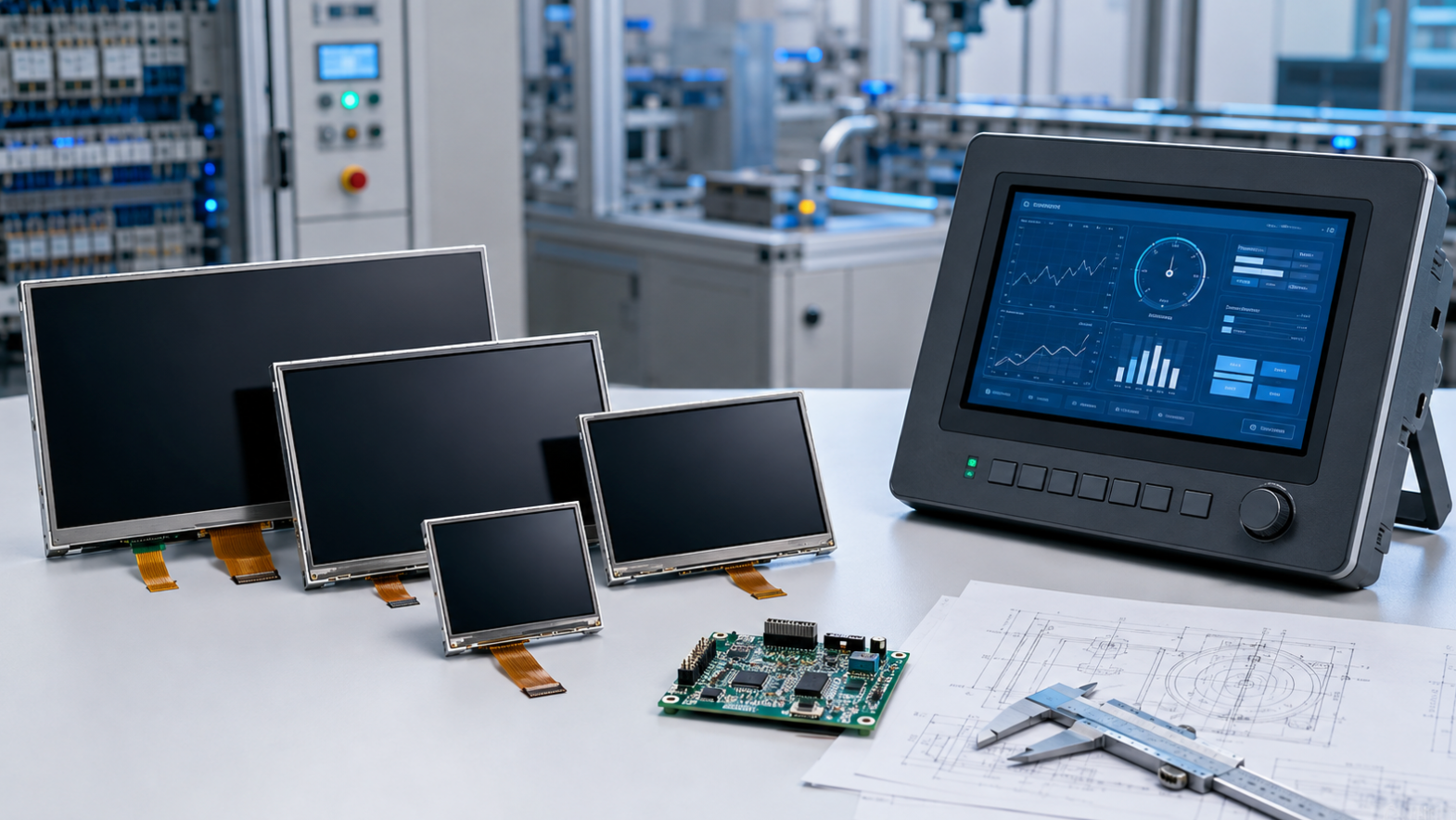
Custom LCD development is easier to manage when “custom” is translated into a specific scope. Changing a cover lens or cable is different from developing a new LCD panel. Before requesting a schedule or price, identify which parts of the display assembly actually need to change.
1. Prepare a requirement brief
State the product application, display size, resolution, viewing direction, interface and host processor. Add the active area, available installation space, brightness conditions, touch needs and environmental profile. Mark each item as mandatory, preferred or open for discussion. This helps the supplier propose an existing module where appropriate.
2. Separate feasibility from commitment
Ask which requirements can be met by an existing module and which require a modified FPC, backlight, cover lens, touch sensor or mechanical frame. Request an explanation of tooling charges, development work and sample scope. New panel development requires its own feasibility and commercial assessment; it should not be assumed to fit a routine module-customization project.
3. Control drawings and electrical details
Approve a revision-controlled outline drawing showing viewing area, active area, connector location, cable bend constraints and mounting references. Check pin numbering, voltage levels, power sequence and initialization requirements. A matching connector shape does not prove electrical compatibility.
4. Evaluate integrated samples
Install samples in the intended enclosure and run representative software. Check image quality, touch behavior, cable routing, mounting pressure and relevant operating conditions. Maintain an issue log with the sample revision and test setup. When a design changes, identify which earlier results need to be repeated.
5. Define approval and change control
Record the approved drawing, module revision, software configuration and acceptance criteria. Agree on how future component changes will be communicated. Confirm production lead time, minimum order quantity and supply arrangements in the project quotation rather than relying on a generic development promise.
Frequently asked questions
Can a standard module be the starting point? Yes, if it satisfies the essential requirements and any modifications are feasible.
What should be sent first? A requirement brief and enclosure drawing usually enable a more useful discussion than a product photograph alone.
Send this package to HXD LCD to request a feasibility review. Ask the quotation to identify exactly what is included before approving development work.