
Display Technology
AMOLED vs TFT LCD for Embedded Products: A Practical Comparison
Compare AMOLED and TFT LCD using the real user interface, power profile, image retention risk and integration requirements.
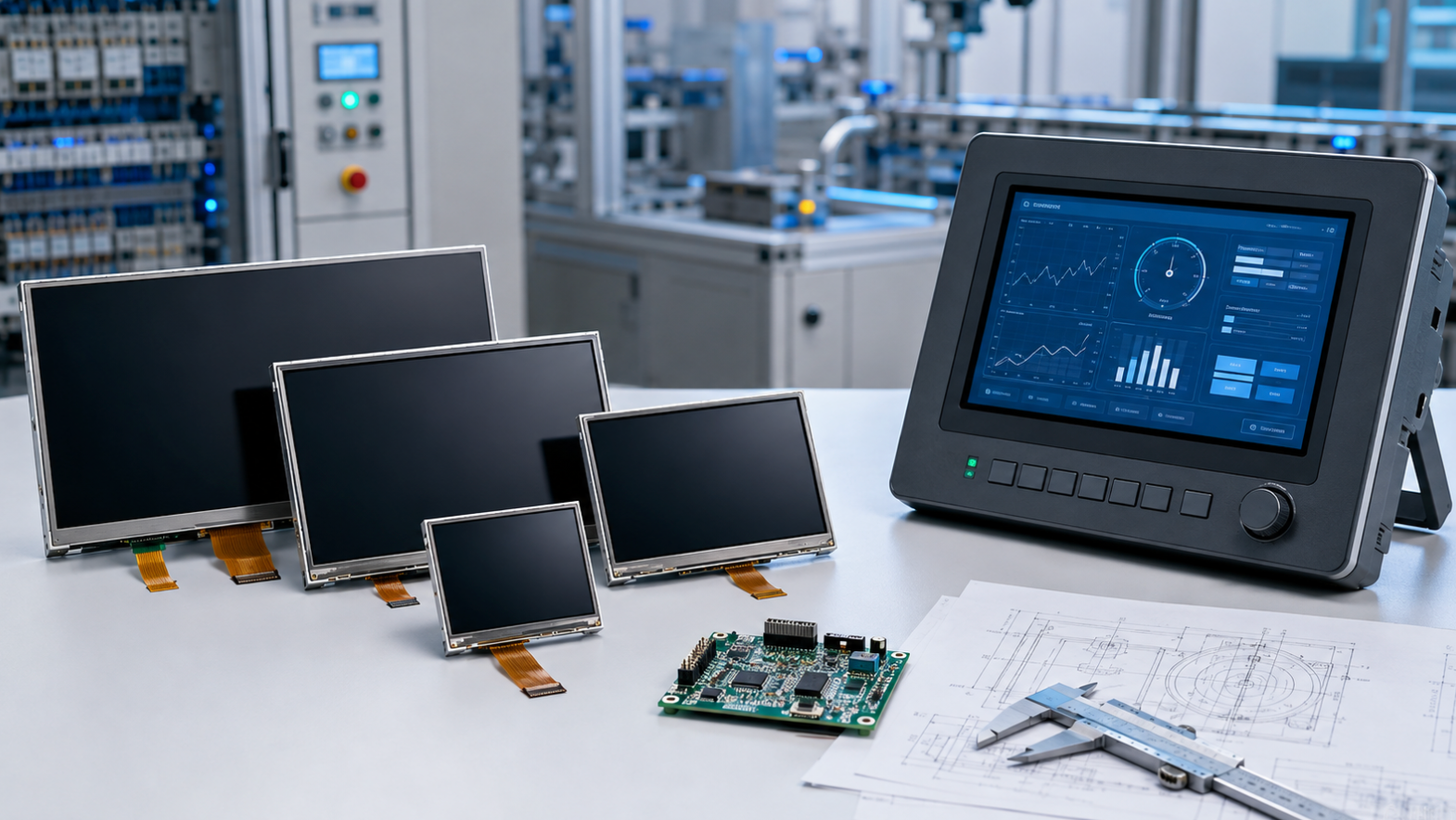
AMOLED and TFT LCD can both support embedded product interfaces, but their strengths depend on the application. In this comparison, TFT LCD means a conventional transmissive liquid crystal display. AMOLED is an OLED display driven by an active-matrix backplane; the word TFT itself is not exclusive to LCD technology.
1. Begin with the real interface
OLED pixels emit their own light, while a conventional TFT LCD controls light supplied by a backlight. This makes black backgrounds and dark interfaces visually different between the technologies. Compare representative screens, including the brightest page, small text, colored indicators and standby mode. A showroom animation is a poor substitute for the intended product interface.
2. Measure power instead of assuming a winner
Do not assume AMOLED is always the lower-power option. Its power depends on displayed content and operating conditions. Likewise, an LCD result depends on its backlight setting and electronics. Measure both candidates using the same user tasks and comparable visible brightness. Include display sleep, touch standby and wake-up behavior in the battery budget.
3. Define aging and retention requirements
OLED aging can produce overall luminance loss and uneven image retention associated with differential pixel use. For a product with fixed icons or a continuously displayed status bar, describe the content and daily operating hours to the supplier. Discuss brightness limits, screen timeout and interface changes where appropriate. Do not infer a guaranteed service life from a generic technology comparison.
4. Check integration before selecting a sample
Confirm the exact interface, pin assignment, voltage, initialization sequence, orientation and software support of each proposed module. Two displays with the same size and resolution may still require different hardware or software. Review mechanical drawings and cable routing before committing the enclosure design.
Frequently asked questions
Is AMOLED automatically better for a wearable? No. Battery behavior, outdoor viewing, supply continuity, mechanical fit and price must be assessed together.
Can an AMOLED replace a TFT LCD directly? Only if all electrical, mechanical and software requirements are compatible; it should not be assumed.
Send HXD LCD the target user interface, operating schedule and host platform when requesting a comparison. Candidate-module measurements are more useful than a universal technology ranking.